


7th International Conference on NLP & Information Retrieval (NLPI 2026)
NLPI 2026
- URL: https://csitec2026.org/nlpi/index
- Event Date: 2026-04-25 ~ 2026-04-26
- Submission Date: 2026-04-11
- Location: Copenhagen, Denmark
Artificial Intelligence Information Theory Language & Linguistics E-learning
7th International Conference on NLP & Information Retrieval (NLPI 2026)
April 25 ~ 26, 2026, Copenhagen, Denmark
https://csitec2026.org/nlpi/index
Scope
The 7th International Conference on NLP & Information Retrieval (NLPI 2026) invites high quality research contributions from academia, industry, and government. NLPI has established itself as a global forum for presenting cutting edge advances in natural language processing, information retrieval, and the rapidly evolving landscape of AI driven language technologies.
As NLP and IR continue to transform communication, knowledge access, and intelligent systems, NLPI 2026 aims to bring together researchers, practitioners, and innovators to exchange ideas, explore emerging challenges, and shape the future of language centric AI. We welcome original, unpublished work that advances theory, algorithms, systems, and applications. All submissions will undergo rigorous peer review, and accepted papers will be included in the conference proceedings.
NLPI 2026 covers a broad range of topics in NLP, IR, and AI driven language technologies. We especially encourage submissions that address modern challenges such as large language models, retrieval augmented generation, multimodal systems, and responsible AI.
Topics of interest include, but are not limited to, the following
Core NLP Tasks & Linguistic Foundations
- Tokenization, POS tagging, chunking, and shallow parsing
- Parsing, grammatical formalisms, and syntactic analysis
- Lexical semantics and semantic role labeling
- Discourse, pragmatics, and dialogue structure
- Phonology, morphology, and linguistic theory
- Linguistic resources, corpora, and annotation methodologies
Large Language Models & Advanced NLP
- Foundation models and large language models (LLMs)
- Prompt engineering, fine tuning, and instruction following
- Hallucination detection and mitigation
- Multilingual, cross lingual, and low resource NLP
- Efficient NLP: compression, distillation, and acceleration
Information Retrieval & Search Technologies
- Classical and neural IR models
- Retrieval augmented generation (RAG)
- Contextual, personalized, and interactive IR
- Evaluation of IR systems and relevance feedback
- Decentralized and federated search
- Social, multimedia, and multimodal IR
- Web scale search, ranking, and indexing
Machine Learning for NLP & IR
- Deep learning architectures for NLP and IR
- Graph neural networks for text and knowledge graphs
- Statistical and knowledge based methods
- Representation learning for text and documents
- Contrastive learning and self supervised methods
- Online, continual, and lifelong learning
Knowledge Representation & Reasoning
- Ontologies, taxonomies, and semantic web
- Knowledge graph construction and completion
- Decentralized knowledge representation
- Reasoning over text, graphs, and multimodal data
- Hybrid neuro symbolic approaches
Generation, Summarization & Language Understanding
- Text generation, paraphrasing, and entailment
- Abstractive and extractive summarization
- Natural language inference (NLI)
- Controlled, safe, and ethical text generation
- Style transfer, simplification, and narrative generation
- Dialogue, Conversational AI & Speech
- Dialogue systems and conversational agents
- Task oriented and open domain dialogue
- Spoken language understanding and dialogue management
- Speech recognition, synthesis, and voice conversion
- Multimodal conversational AI
Information Extraction & Text Mining
- Named entity recognition, relation extraction, event extraction
- Topic modeling, tracking, and subject indexing
- Text mining for scientific, legal, and biomedical domains
- Event and anomaly detection
- Trend analysis and large scale text analytics
Sentiment, Social Media & Affective Computing
- Sentiment analysis and opinion mining
- Emotion, personality, and behavioral signal detection
- NLP for social media, misinformation, and online safety
- Computational social science and social network analysis
Multimodal & Cross Domain NLP
- Vision language models (VLMs)
- Audio text, video text, and multimodal fusion
- Multimodal retrieval and generation
- Cross domain and cross modal transfer
Machine Translation & Multilingual Technologies
- Neural machine translation (NMT)
- Low resource and unsupervised MT
- Evaluation of MT quality and bias
- Speech to speech and multimodal translation
Ethics, Safety & Responsible AI
- Bias, fairness, and inclusivity in NLP and IR
- Privacy preserving NLP and federated learning
- Safety, robustness, and adversarial attacks
- Ethical considerations in language technologies
- Transparency, explainability, and model interpretability
Visualization, Interaction & Human Centered NLP
- Visualization of NLP and IR results
- Human AI collaboration and interactive NLP tools
- Explainable interfaces for search and language models
- User centered evaluation of NLP systems
Paper Submission
Authors are invited to submit papers through the conference Submission System by April 11, 2026 (Final Call). Submissions must be original and should not have been published previously or be under consideration for publication while being evaluated for this conference. The proceedings of the conference will be published by Computer Science Conference Proceedings in Computer Science & Information Technology (CS & IT) series (Confirmed).
Selected papers from NLPI 2026, after further revisions, will be published in the special issue of the following journal.
- International Journal on Natural Language Computing (IJNLC)
- International Journal of Web & Semantic Technology (IJWesT)
- International Journal of Database Management Systems (IJDMS)
Important Dates
- Submission Deadline: April 11, 2026 (Final Call)
- Authors Notification: April 18, 2026
- Registration & camera - Ready Paper Due: April 21, 2026
Contact Us
Here's where you can reach us: nlpi@csitec2026.org (or) nlpiconfe@yahoo.com
Submission URL: https://necom2026.org/submission/index.php
Event Promotion

|
|
The 13th International Conference on Quantum Dots (QD 2026) |
| 2026-05-17 ~ 2026-05-22 |

|
|
The 22nd International Symposium on the Physics of Semiconductors and Applications (ISPSA 2026) |
| 2026-06-28 ~ 2026-07-02 |

|
|
The 15th Asia-Pacific Conference on Transportation and the Environment (APTE 2026) |
| 2026-07-08 ~ 2026-07-10 |
|
|
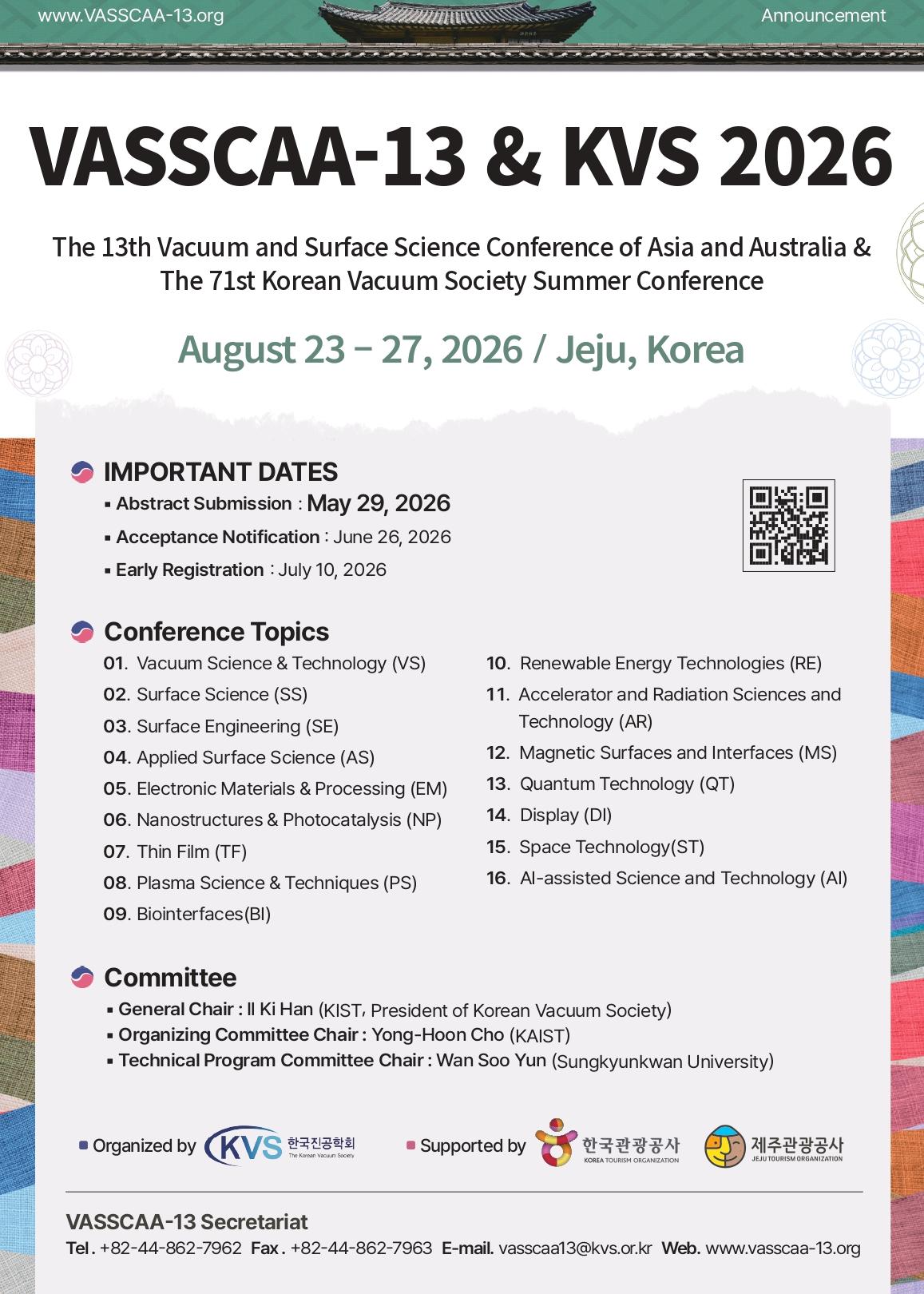
VASSCAA-13 & The 71st KVS Summer Annual Conference (VASSCAA 13) |
| 2026-08-23 ~ 2026-08-27 |

|
|
ACEM26 / Structures26 (ACEM26) |
| 2026-08-24 ~ 2026-08-25 |
Journal Promotion

|
| Acta Koreana (Acta Koreana) |

|
| Acta Via Serica (AVS) |

|
| Advances in Concrete Construction (Advances in Concrete Construction ) |

|
| Advances in Nano Research (Advances in Nano Research) |
|
| Computers and Concrete (Computers and Concrete) |

|
| Earthquakes and Structures, An International Journal (Earthquakes and Structures) |

|
| Geomechanics and Engineering (Geomechanics and Engineering) |
|
| Journal of Information Processing Systems (JIPS) |

|
| Journal of Internet Computing and Services (KSII - JICS) |

|
| Membrane and Water Treatment (MWT) |

|
| Smart Structures and Systems (Smart Structures and Systems) |

|
| Steel and Composite Structures, An International Journal (Steel and Composite Structures) |

|
| Structural Engineering and Mechanics, An International Journal (Structural Engineering and Mechanics) |

|
| Wind and Structures, An International Journal (Wind and Structures) |




MANUSCRIPTLINK © 2015 -
