

29th BANGKOK International Conference on Law, Justice, and Human Rights (BLJHR-26) scheduled on March 23-25, 2026 Bangkok (Thailand)
BLJHR-26
- URL: https://eaamp.erpub.org/conference/180
- Event Date: 2026-03-23 ~ 2026-03-25
- Submission Date: 2026-03-02
- Organizer: EAAMP
- Location: Bangkok, Thailand
Criminology, Criminal Law & Policing European Law
Call for papers/Topics
Topics of Interest for Submission include, but are Not Limited to:
1. Core Legal Disciplines and Systems
These topics cover the fundamental structures of law and how justice is administered.
Constitutional Law:
Separation of Powers (Executive, Legislative, Judicial branches).
Federalism and the division of authority.
Judicial Review and constitutional interpretation.
Criminal Law and Procedure:
Substantive Criminal Law (elements of specific crimes, e.g., homicide, theft).
Criminal Procedure (arrests, search and seizure, trials, sentencing).
Penology and theories of punishment (retribution, deterrence, rehabilitation).
Civil Law (Torts and Contracts):
Tort Law (negligence, intentional torts, defamation, product liability).
Contract Law (formation, breach, remedies, and specific performance).
Administrative Law:
Regulation of government agencies and their actions.
Rulemaking and agency adjudication.
Jurisprudence and Legal Philosophy:
Legal Positivism vs. Natural Law theory.
Critical Legal Studies and feminist jurisprudence.
2. Specialized Areas of Law
These focus on specific sectors of human activity and regulatory frameworks.
International Law:
Public International Law (treaties, customary law, state sovereignty).
International Criminal Law (genocide, war crimes, the International Criminal Court - ICC).
Law of the Sea and international environmental agreements.
Human Rights Law:
International Bill of Human Rights (UDHR, ICCPR, ICESCR).
Regional human rights systems (e.g., European Court of Human Rights, Inter-American System).
Refugee Law and the principle of non-refoulement.
Environmental Law:
Regulation of pollution, conservation of resources, and climate change litigation.
Intellectual Property Law:
Patents, copyrights, and trademarks.
Digital rights management and internet law.
Family Law:
Marriage, divorce, child custody, and adoption.
3. Justice, Ethics, and Social Issues
This category addresses the social implications, fairness, and ethical challenges within the legal system.
Access to Justice:
Legal aid, pro bono services, and affordability of legal representation.
Alternative Dispute Resolution (ADR) like mediation and arbitration.
Judicial and Legal Ethics:
Professional responsibility for lawyers and judicial conduct.
Conflicts of interest and the duty of competence.
Restorative Justice:
Focus on repairing harm through victim-offender reconciliation and community involvement.
Social Justice and Equality:
Critical Race Theory and the study of bias in legal outcomes.
Disability rights and LGBTQ+ rights under the law.
Technology and Law:
Cybercrime, data privacy, and the regulation of Artificial Intelligence (AI).
Forensics and evidentiary issues related to digital evidence.
Event Promotion

|
|
The 13th International Conference on Quantum Dots (QD 2026) |
| 2026-05-17 ~ 2026-05-22 |

|
|
The 22nd International Symposium on the Physics of Semiconductors and Applications (ISPSA 2026) |
| 2026-06-28 ~ 2026-07-02 |

|
|
The 15th Asia-Pacific Conference on Transportation and the Environment (APTE 2026) |
| 2026-07-08 ~ 2026-07-10 |
Journal Promotion

|
| Acta Koreana (Acta Koreana) |
|
| Acta Via Serica (AVS) |

|
| Earthquakes and Structures, An International Journal (Earthquakes and Structures) |
|
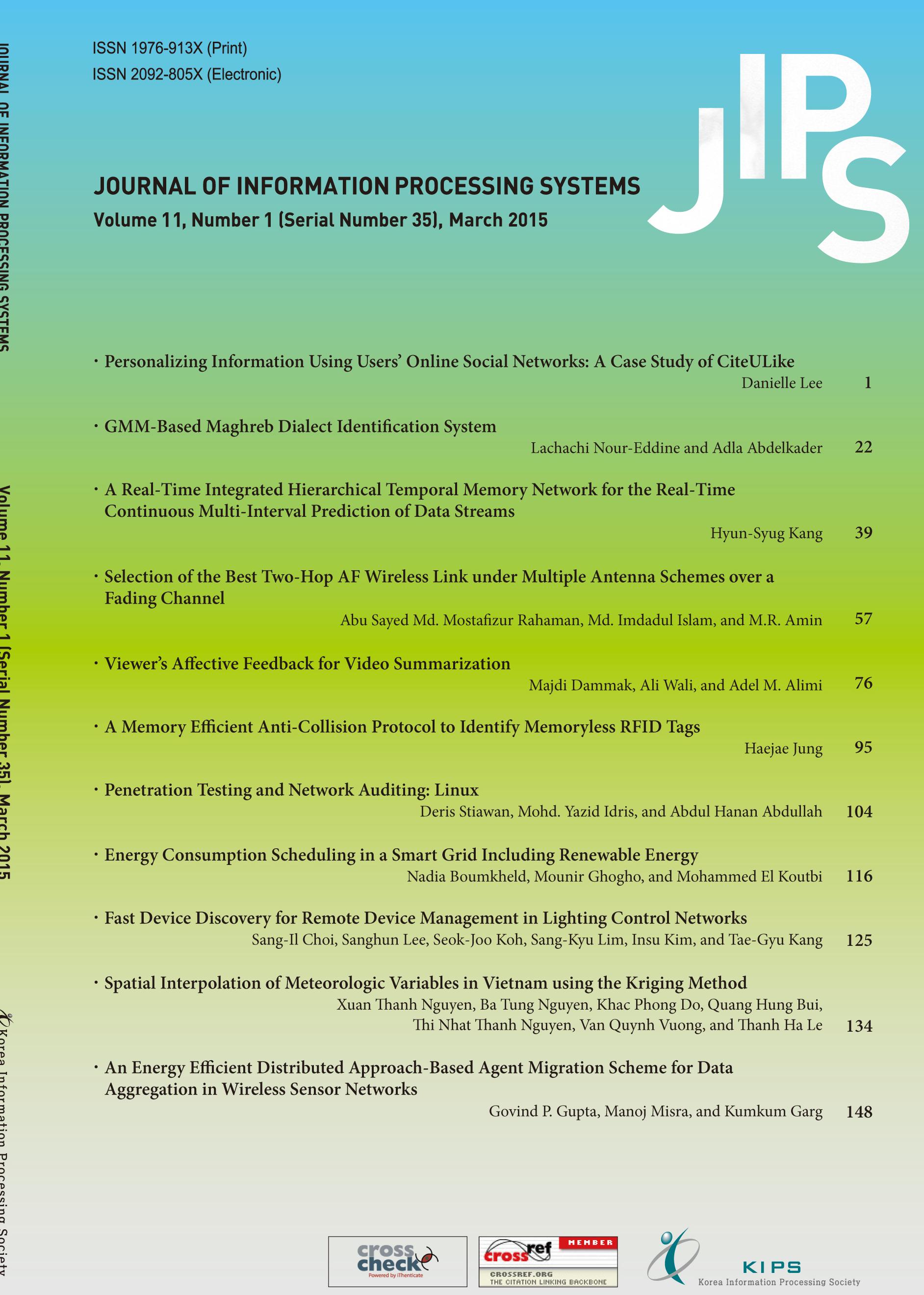
| Journal of Information Processing Systems (JIPS) |

|
| Journal of Internet Computing and Services (KSII - JICS) |

|
| Membrane and Water Treatment (MWT) |

|
| Smart Structures and Systems (Smart Structures and Systems) |




MANUSCRIPTLINK © 2015 -
