


16th MILAN International Conference on Robotics, Automation & Manufacturing Engineering (ICRAME-26) scheduled on March 16-18, 2026 Milan (Italy)
ICRAME-26
- URL: https://eamae.erpub.org/conference/191
- Event Date: 2026-03-16 ~ 2026-03-18
- Submission Date: 2026-03-01
- Organizer: EAMAE
- Location: Milano, Italy
Automation & Control Theory Manufacturing & Machinery Robotics
Call for papers/Topics
Topics of Interest for Submission include, but are Not Limited to:
1. Core Robotics & Autonomous Systems
This area covers the fundamental mechanics, control, and "brain" of a robot.
Robot Kinematics & Dynamics:
Forward and inverse kinematics for multi-DOF (Degree of Freedom) arms.
Trajectory planning and motion control in cluttered environments.
Perception & Sensing:
3D Computer Vision: Pose estimation, object tracking, and semantic segmentation.
Sensor Fusion: Combining LiDAR, RADAR, and Ultrasonic data for 360° awareness.
SLAM: Simultaneous Localization and Mapping for navigation in GPS-denied areas.
Intelligent Navigation:
AMRs (Autonomous Mobile Robots): Pathfinding in dynamic warehouses.
Swarm Robotics: Decentralized coordination of multiple small robots for search-and-rescue.
Bio-inspired Locomotion: Bipedal/quadrupedal movement (e.g., Boston Dynamics style) and soft robotics.
2. Industrial Automation & Smart Manufacturing
The integration of technology to create the "Smart Factory" (Industry 4.0/5.0).
Cyber-Physical Systems (CPS):
Digital Twins: Creating real-time virtual replicas of entire production lines.
IIoT (Industrial Internet of Things): Edge computing and 5G communication protocols between machines.
Control Systems Architecture:
PLC & SCADA: Advanced programming for large-scale industrial supervision.
Embedded Systems: Real-time operating systems (RTOS) for low-latency hardware control.
Process Optimization:
AI-Driven Predictive Maintenance: Analyzing vibration and heat data to fix machines before they break.
Automated Quality Control: Using high-speed cameras and AI to detect 1mm defects in real-time.
3. Human-Robot Interaction (HRI) & Collaboration
As robots move out of cages and onto the shop floor alongside humans.
Collaborative Robots (Cobots):
Force-limiting sensors for safe, cage-free operation near human workers.
Lead-through programming (manually moving the robot arm to "teach" it a path).
Human-Machine Interfaces (HMI):
Haptics: Tactile feedback systems for remote surgery or hazardous material handling.
Gesture & Natural Language Control: Using voice or hand signals to direct industrial robots.
Augmented Reality (AR): Using AR glasses to overlay repair instructions onto physical machines.
Exoskeletons: Wearable robotics for worker fatigue reduction and heavy lifting assistance.
4. Advanced Manufacturing Processes
Techniques that rely on high-precision robotics to create products.
Additive Manufacturing (3D Printing):
Robotic-arm-based large-scale 3D printing (concrete, metal, carbon fiber).
Hybrid manufacturing (combining 3D printing with CNC milling).
Micro & Nano-Manufacturing:
Precision assembly of semiconductors and medical implants.
MEMS (Micro-Electro-Mechanical Systems) fabrication.
Automated Joining & Assembly:
High-speed robotic welding, laser cutting, and precision adhesive dispensing.
5. Cross-Cutting Issues (The "Industry 5.0" Shift)
Addressing the societal, ethical, and environmental impact of engineering.
Green Manufacturing & Sustainability:
Energy-Aware Robotics: Optimizing robot movement to minimize power consumption.
Robotics for Circularity: Automating the disassembly of electronics and batteries for recycling.
Safety & Cybersecurity:
Functional safety standards (ISO 10218, ISO/TS 15066).
Securing industrial control systems (ICS) from remote hacking.
Ethics & Workforce:
The "Future of Work": Reskilling programs for human-AI collaborative roles.
Liability and accountability in autonomous decision-making.
Event Promotion

|
|
The 13th International Conference on Quantum Dots (QD 2026) |
| 2026-05-17 ~ 2026-05-22 |
|
|
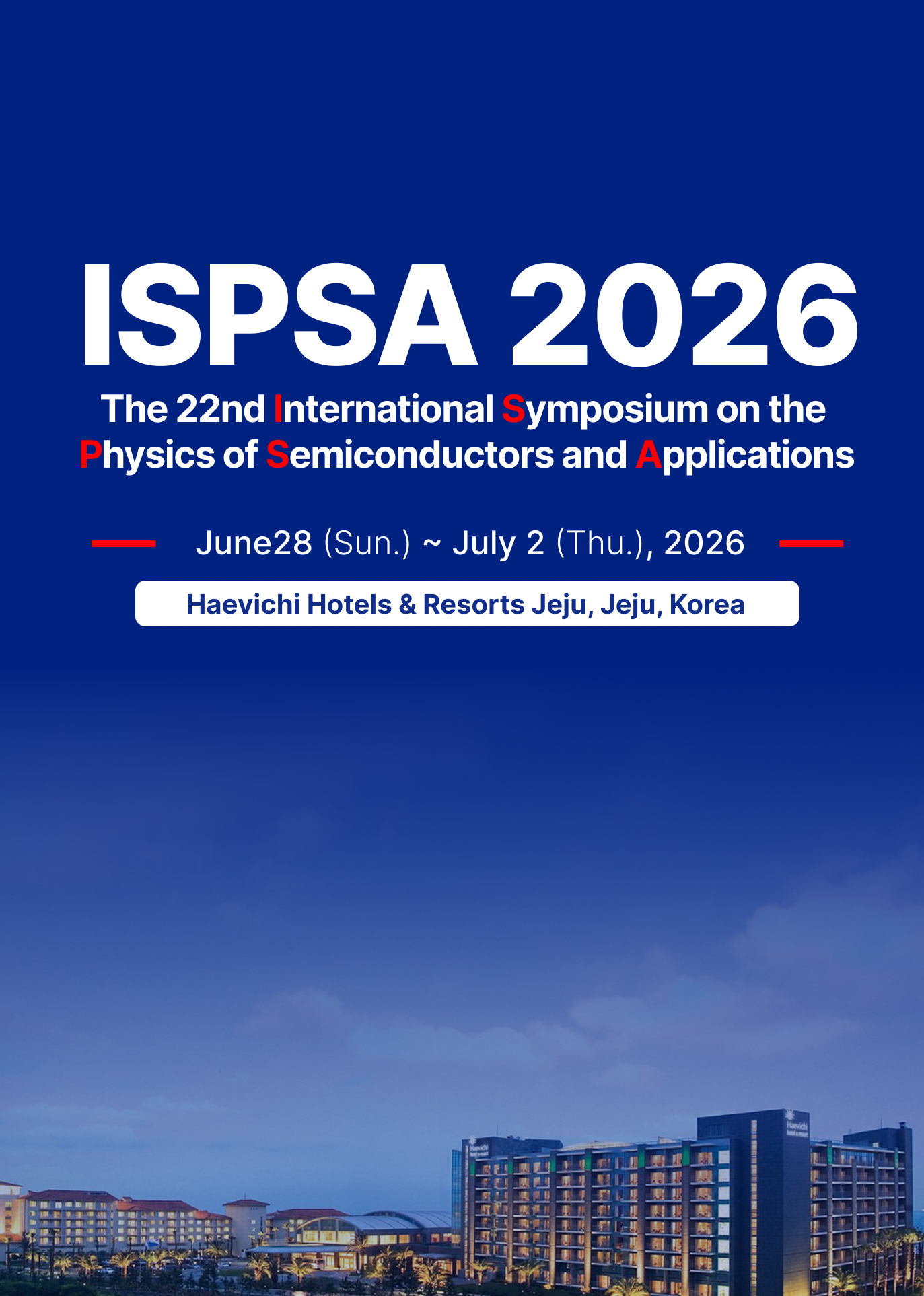
The 22nd International Symposium on the Physics of Semiconductors and Applications (ISPSA 2026) |
| 2026-06-28 ~ 2026-07-02 |

|
|
The 15th Asia-Pacific Conference on Transportation and the Environment (APTE 2026) |
| 2026-07-08 ~ 2026-07-10 |
Journal Promotion

|
| Acta Koreana (Acta Koreana) |

|
| Acta Via Serica (AVS) |

|
| Earthquakes and Structures, An International Journal (Earthquakes and Structures) |
|
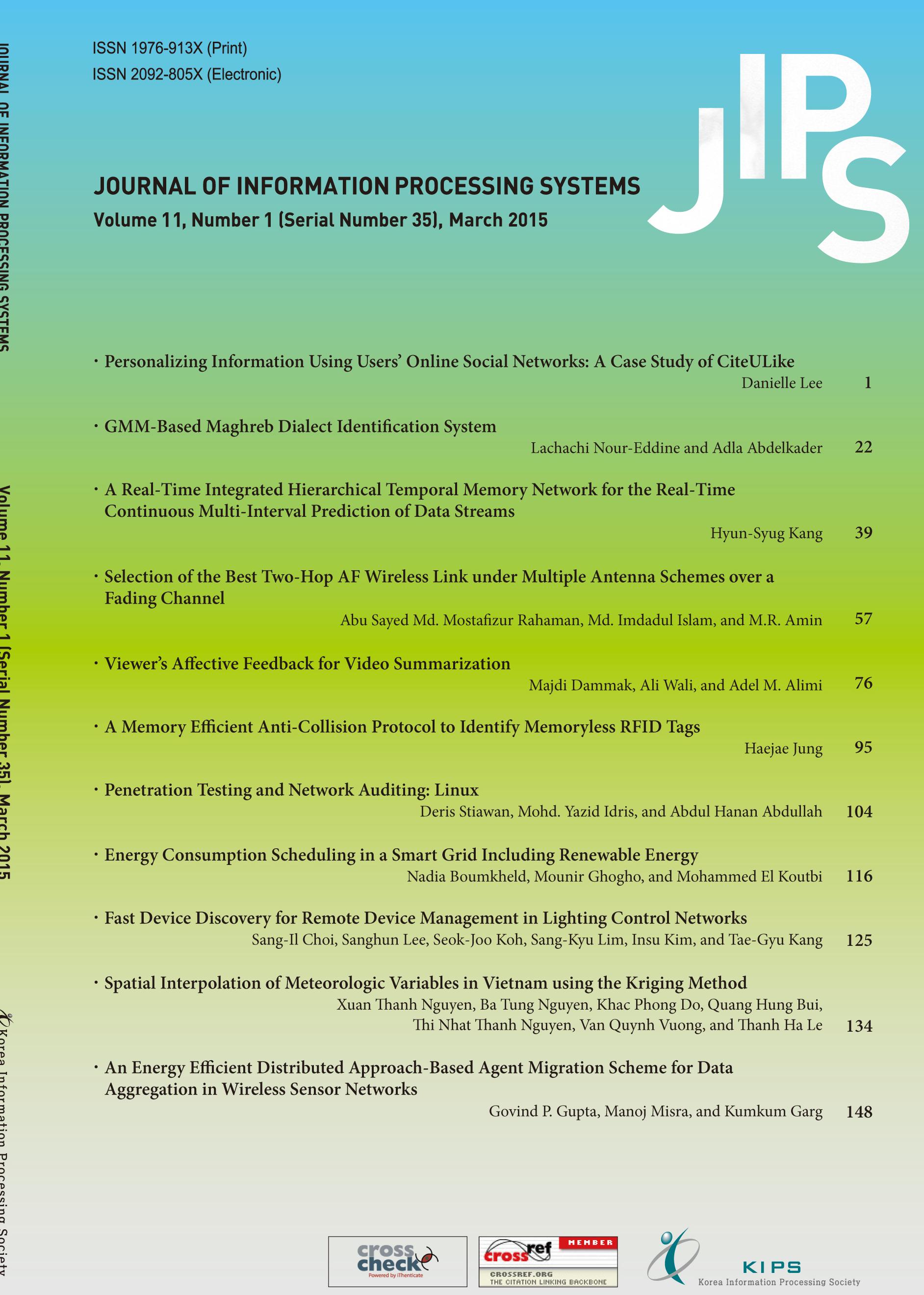
| Journal of Information Processing Systems (JIPS) |

|
| Journal of Internet Computing and Services (KSII - JICS) |

|
| Membrane and Water Treatment (MWT) |

|
| Smart Structures and Systems (Smart Structures and Systems) |




MANUSCRIPTLINK © 2015 -
